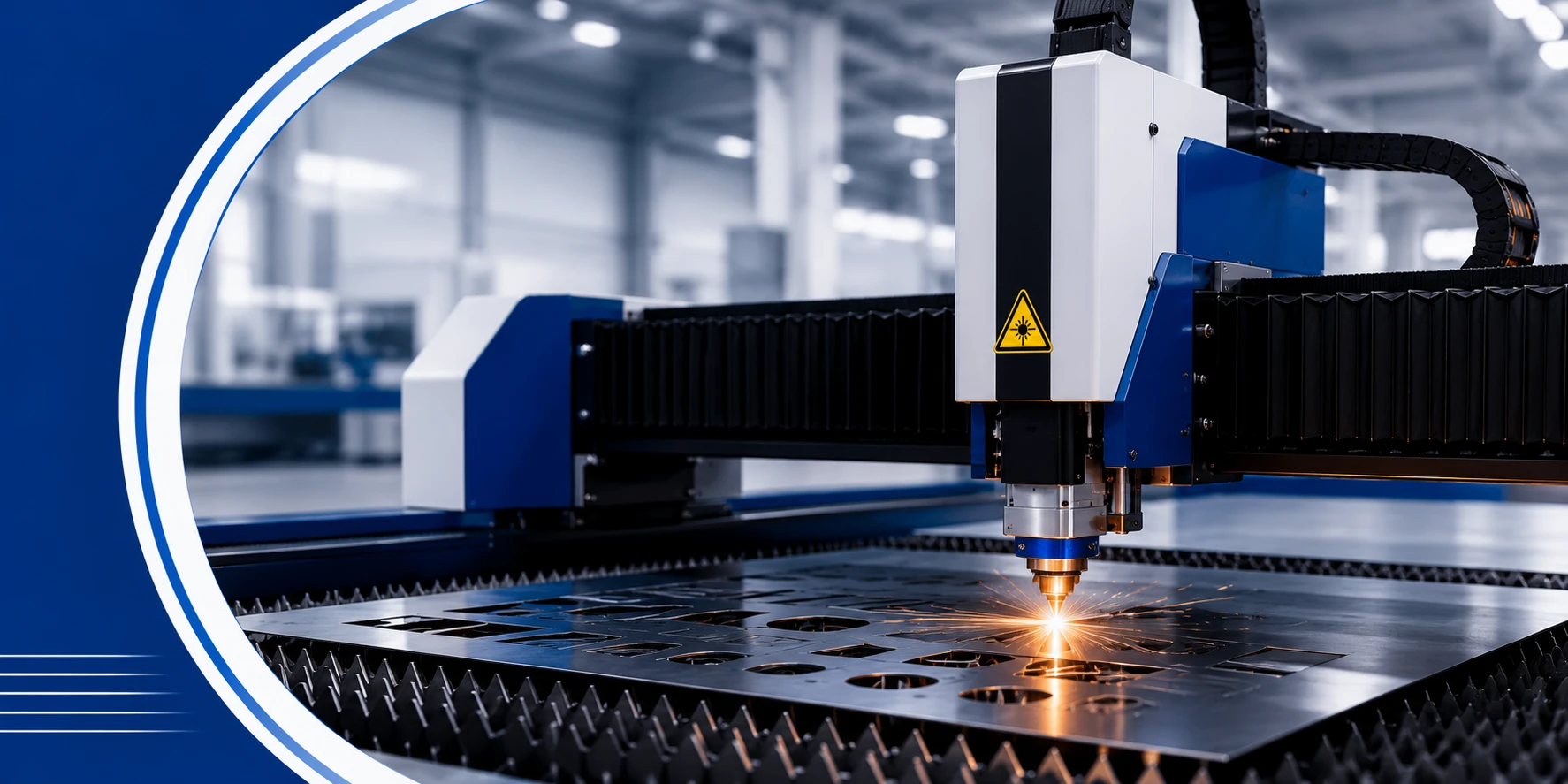
Selecting the ideal laser cutting machine for an industrial workshop requires a comprehensive engineering evaluation of material compositions, sheet thickness spectrums, required production throughput, and dimensional edge quality requirements. Navigating the choice between distinct laser technologies is fundamental to achieving maximum cutting velocity, optimal electrical efficiency, and superior edge squareness, as different laser wavelengths interact uniquely with metallic alloys and organic substrates.
For non-metallic sheet materials such as cast acrylic, natural hardwoods, MDF boards, technical textiles, genuine leather, and corrugated cardboard, a CO2 Laser Cutting Machine operating at a 10.6-micrometer wavelength remains the established global industry standard. Organic molecular chains absorb this infrared wavelength readily, resulting in instantaneous thermal vaporization that produces crystal-clear flame-polished acrylic edges and clean, char-minimized wooden contours. Conversely, when manufacturing requirements primarily involve cutting reflective structural metals such as stainless steel, mild steel, aluminum, and brass, a high-power Fiber Laser Cutting Machine is indispensable due to its 1.06-micron wavelength and high electrical-to-optical conversion efficiency.
Beyond laser source physics, careful mechanical assessment of the machine chassis and motion delivery system is critical. A heavy-duty, stress-relieved steel frame is vital to absorb cutting head acceleration shocks without transmitting harmonic chatter to the cut workpiece. Similarly, selecting between knife-blade worktables for rigid sheets, dense honeycomb grids for flexible textiles, or automated shuttle pallet changers for continuous high-volume production dictates the daily efficiency of your factory floor. Evaluating gas assist options—such as high-pressure clean dry air, pure nitrogen for non-oxidized stainless edges, or oxygen for rapid carbon steel piercing—further impacts operational edge finishing and operating overheads.
By consulting with experienced machinery engineers like Sky MultiTech Solutions Pvt. Ltd., fabrication workshops gain customized technical guidance tailored to their specific sheet sizes and production cycles. Investing in a properly sized laser cutting system equipped with industrial digital DSP controllers and closed-loop refrigeration guarantees superior part consistency, reduced material kerf scrap, and elevated commercial profitability over years of continuous manufacturing.